Tangerine Smart Rails
One rail operating layer across rolling stock, track, traction power, and yard.
Tangerine Smart Rails is built for railways, not generic industrial AI. It connects fleet telemetry, wayside condition, traction power, depot workflows, video, and control-center data into one rail runtime so operators can reduce disruption, protect asset life, improve punctuality, and run every corridor with better visibility.
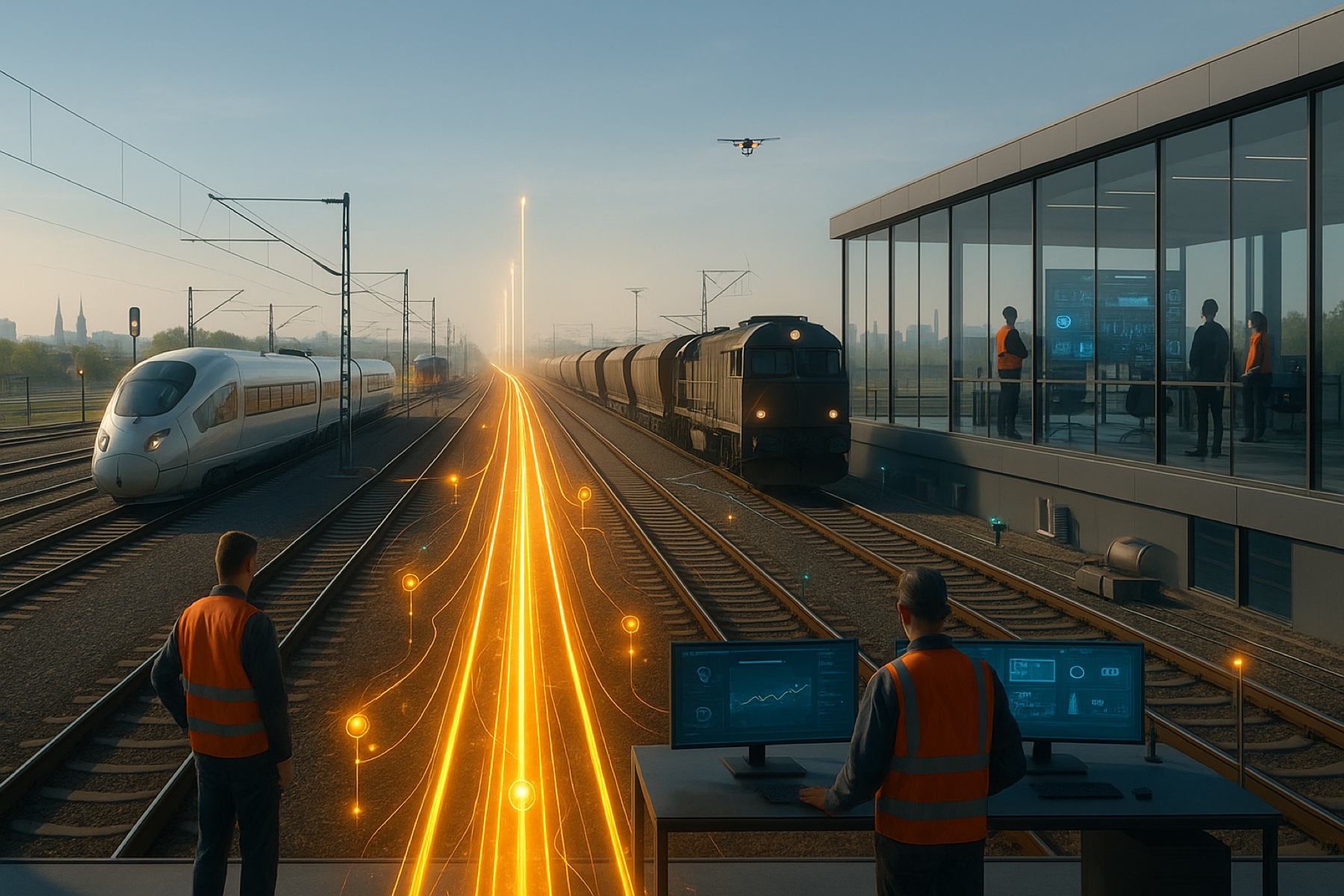
Corridor visibility
See passenger, freight, and wayside conditions on the same timeline.
Rail-grade control
Move from alerting to action with operator approval, auditability, and override.
Why this category matters
Rail operators do not need another dashboard. They need a system that makes the network measurably better every day.
Turn vibration, heat, video, current, and telemetry into maintenance signals before disruption hits service.
Connect route, rolling stock class, timetable, and power behavior for real operating savings.
Every recommendation, scenario, and action remains explainable, supervised, and reversible.
Platform
Built for fleets, wayside assets, depots, terminals, and live rail control.
Sense the physical rail network
Capture high-fidelity signals from wayside cabinets, rolling stock, video, vibration, energy systems, and yards on one timebase.
Normalize into one data rail
Bring OT and IT into a governed, AI-ready layer that keeps asset health, operations, and energy in the same decision space.
Predict what matters next
Rank anomalies by operational impact, not raw signal noise, so teams focus on service, safety, and resilience first.
Orchestrate with authority
Use digital twins and operator-approved playbooks to move from analytics to governed action across live corridors.
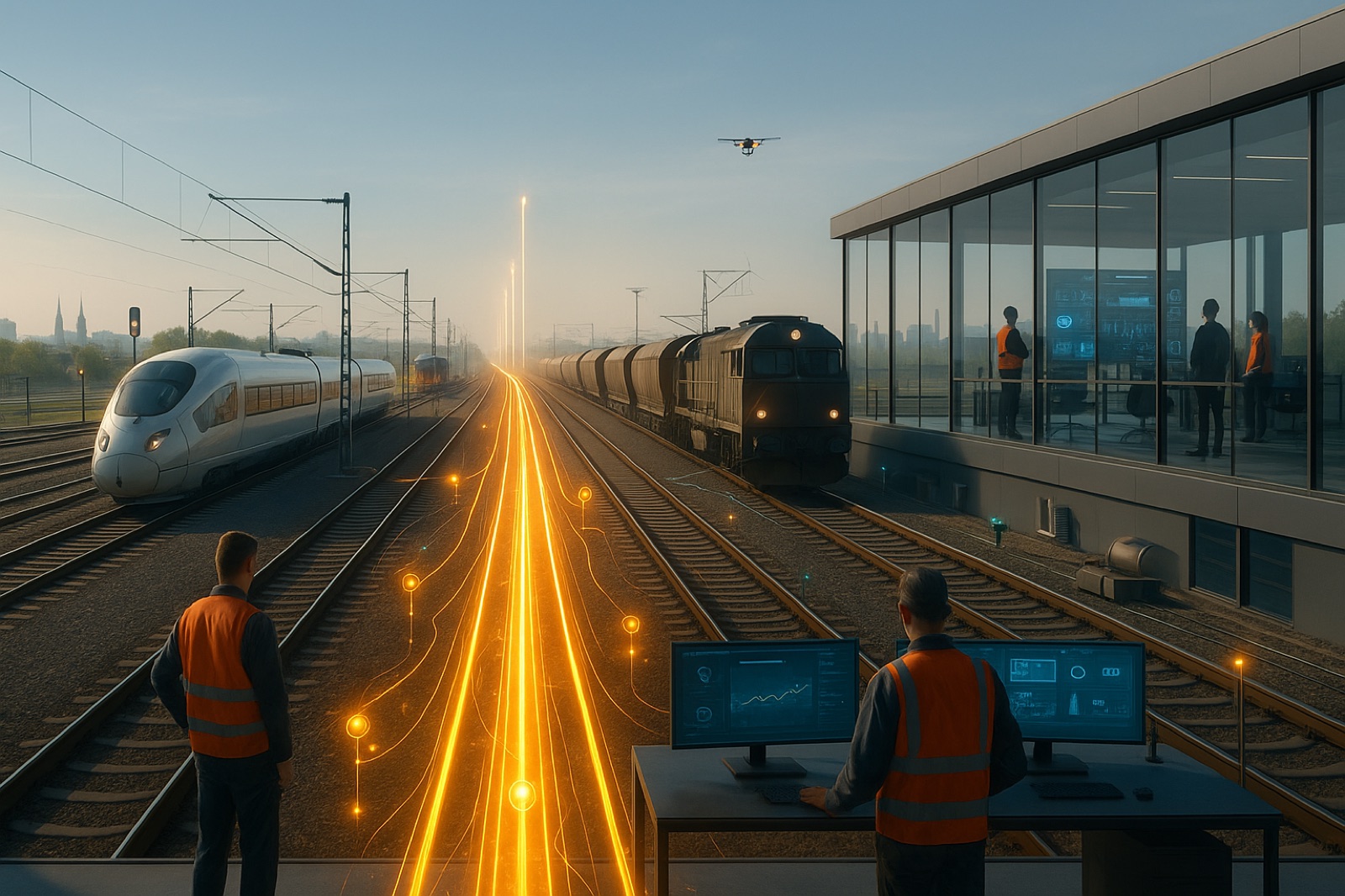
From edge to executive
One intelligence stack for rolling stock, infrastructure, operations, and leadership.
- Edge runtime for ruggedized devices and real-time signal capture
- AI orchestration for maintenance, routing, energy, and anomaly response
- Executive intelligence for uptime, emissions, resilience, and network performance
- Governed deployment posture for public operators, private concessions, and strategic infrastructure
Rail programs
Four rail use cases with clear operating value.
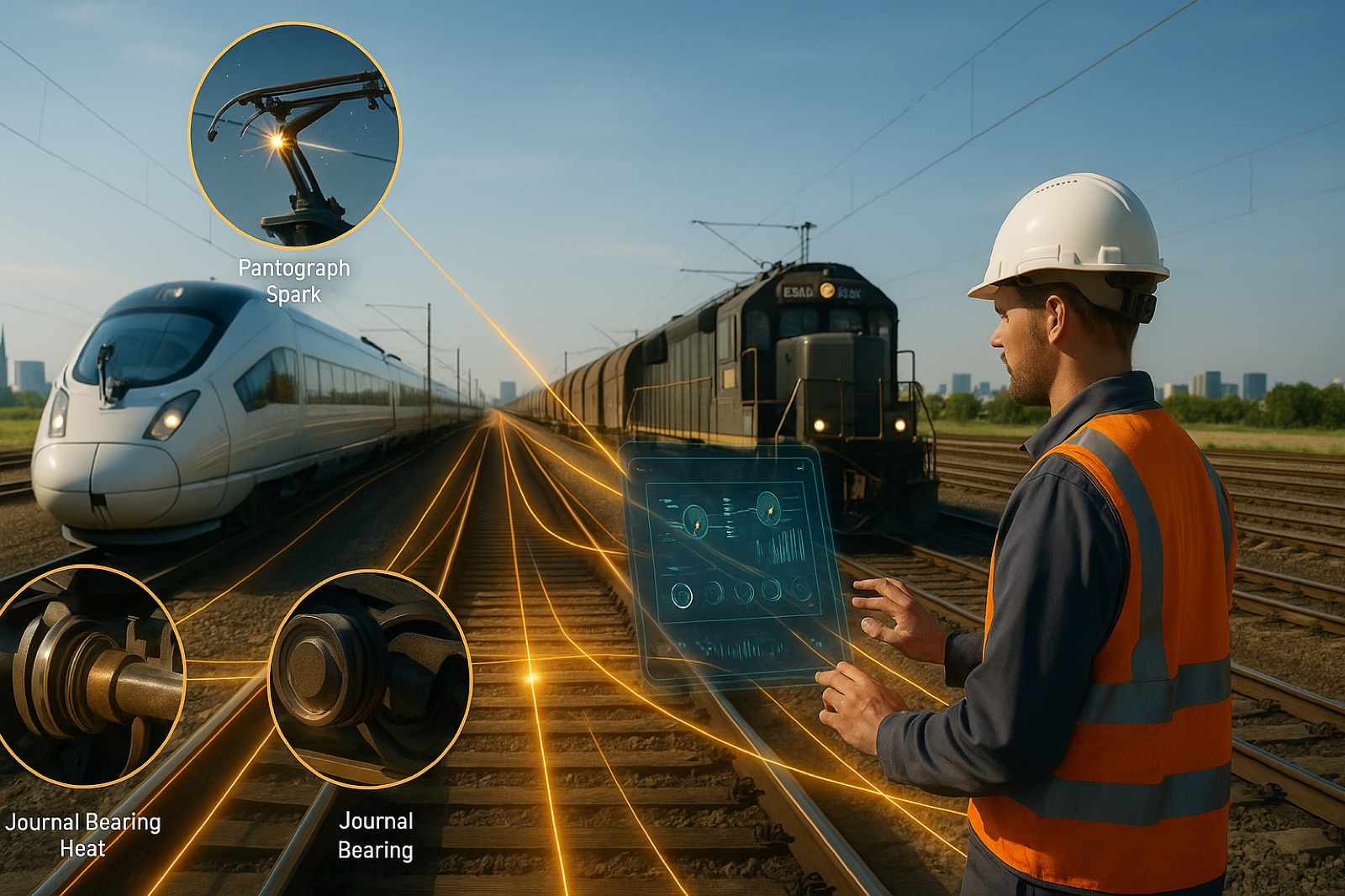
Maintenance intelligence
See bearing heat, pantograph wear, and switch risk before service is compromised.
For rolling stock fleets, depot teams, and wayside maintenance planners.
Condition signals become ranked interventions, verified work orders, and better asset life across fleets and fixed infrastructure.
Monitor bogies, bearings, traction components, and switch assets with earlier fault detection and better maintenance timing.
Energy and ESG
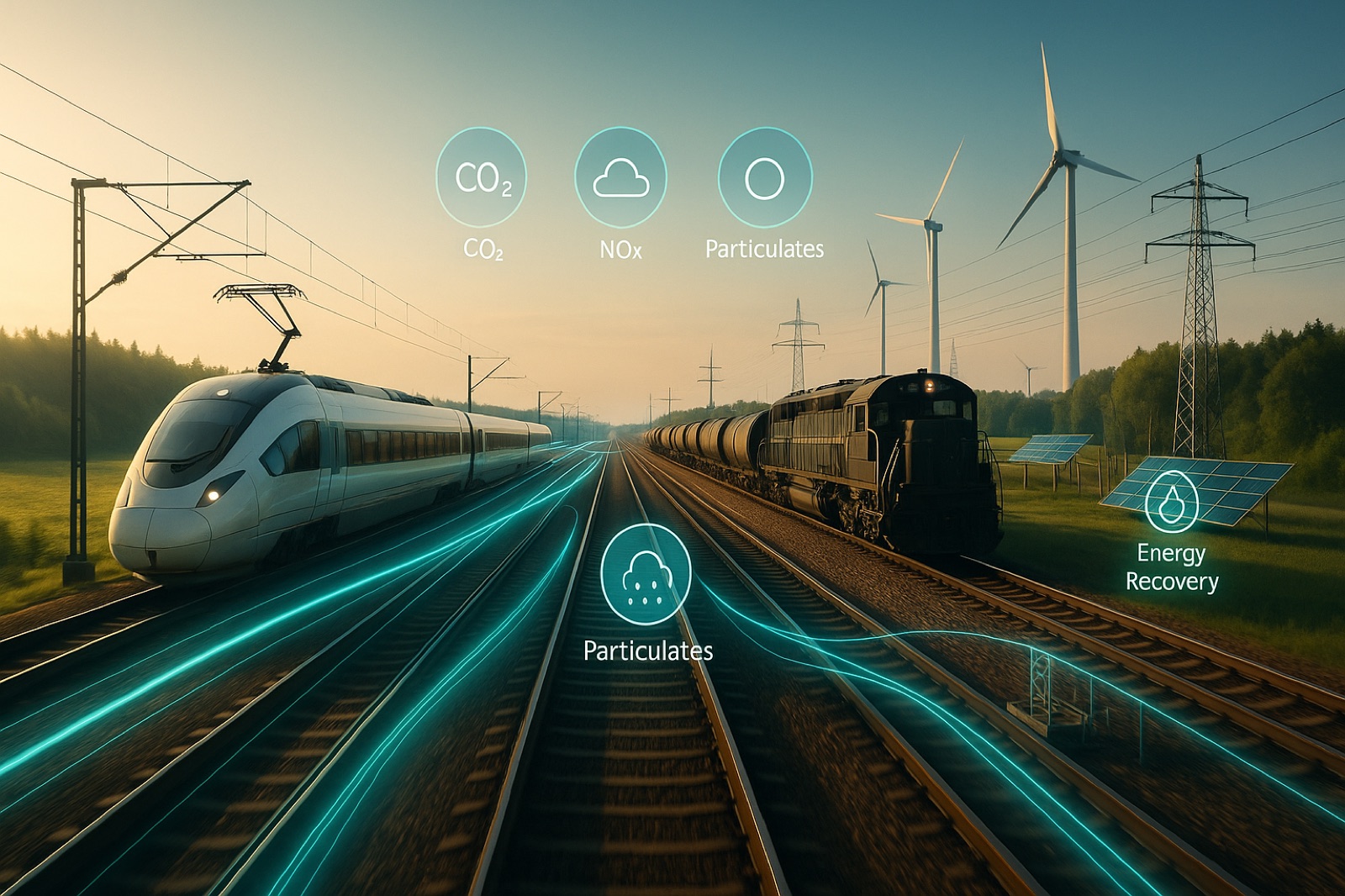
Link traction performance to real corridor economics.
For traction power teams, sustainability leads, and operators managing energy cost.
Optimize power draw, regenerative return, route efficiency, and emissions reporting from the same operational model.
Tie energy use to train class, route profile, traction behavior, and corridor performance so savings are operational, not abstract.
Intermodal flow
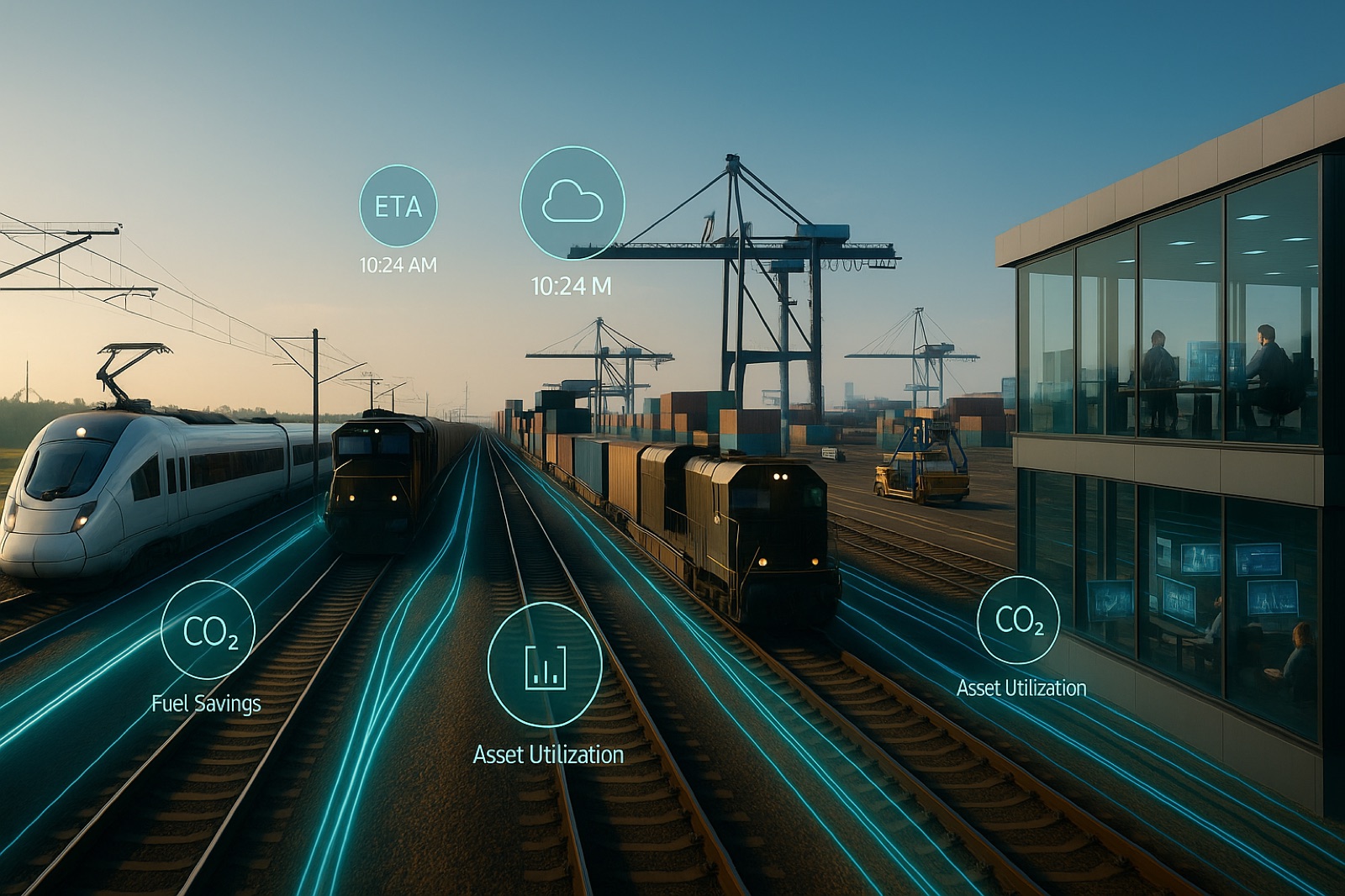
Coordinate rail, yard, and terminal movement as one network.
For freight corridors, yard control, terminals, and industrial logistics operations.
Align ETA, utilization, asset flow, and carbon impact where freight rail performance meets real industrial throughput.
Improve handoff between rail, depot, port, and terminal operations with better arrival certainty, utilization, and asset flow.
Runtime digital twin
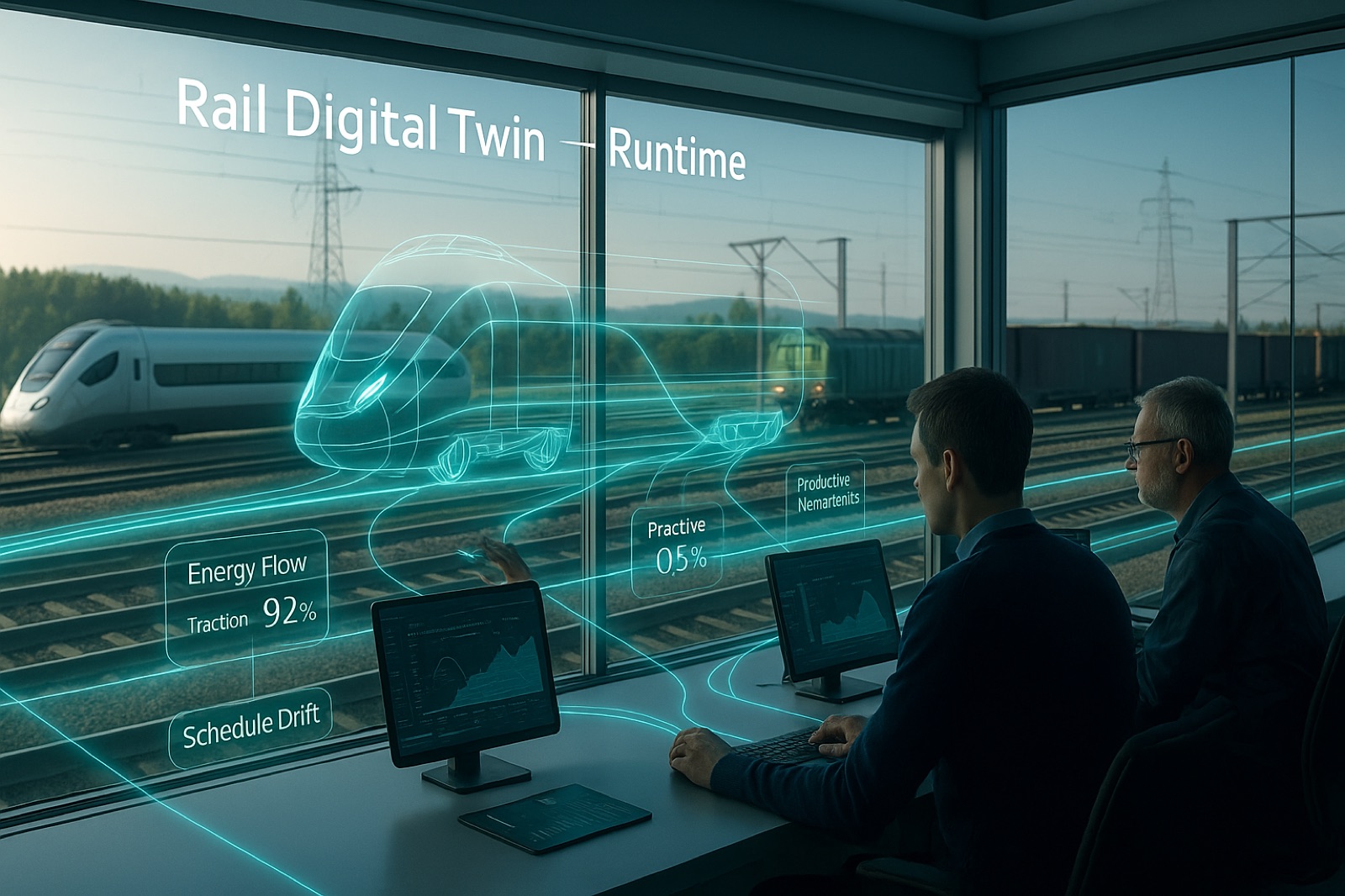
Use simulation as an operating instrument, not a reporting artifact.
For network planning, dispatch, control centers, and progressive autonomy programs.
Validate changes before deployment, feed live network behavior back into the model, and raise trust in every automated decision.
Test timetable shifts, maintenance windows, power decisions, and routing changes before they affect the live rail network.
Command and governance
Designed for operators who need control, not black-box promises.
Tangerine Smart Rails should feel premium because the promise is premium: stronger uptime, stronger safety, stronger energy performance, and stronger command authority over every automated recommendation.
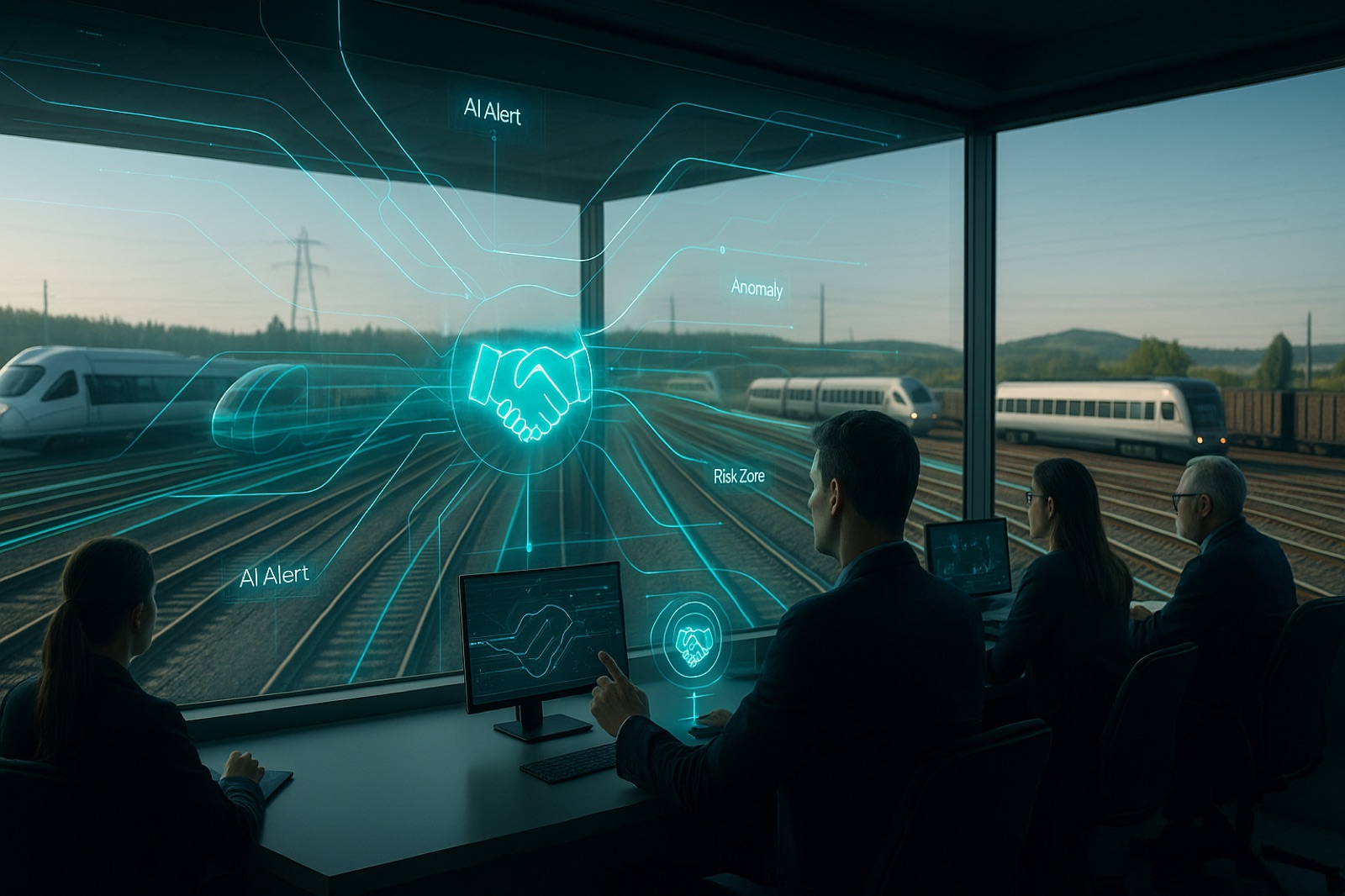
Every alert is tied to the asset, corridor, and operational consequence it affects.
Digital twin checks simulate likely outcomes before high-impact decisions change live operations.
Operators remain in the loop with explicit control over escalation, playbooks, and override.
Next move
Start with one rail corridor and one measurable operating result.
The strongest first engagement is a rail-specific deployment: one fleet, one corridor, or one terminal with a defined target around reliability, maintenance, energy, or operational flow.
Rolling stock condition, wayside fault detection, and fewer service-affecting failures.
Better maintenance timing, cleaner work orders, and clearer visibility across fleets and depots.
Traction efficiency, corridor utilization, ETA accuracy, and intermodal coordination on one runtime.